

Alliance4Life
Alliance4Life is a bottom-up initiative of twelve leading life science institutions and universities from eleven countries of Central and Eastern Europe that aim at closing the divide in European health research and innovation between EU 14 and later joined EU 13 countries.
Members of the Alliance are progressive research institutions that have the necessary strength to stimulate institutional change.
Large-scale ESIF investments into the life science infrastructure alone could not close the R&I gap in Europe so far, financial support needs to be complemented by measures on research and innovation strategy at institutional and national levels.
Institutions gathered in this Alliance believe that improving governance and managerial practices as well as transforming institutional culture will enhance efficiency and increase return on investment.
Masaryk University (CEITEC) (Czech Republic)
St Anne University Hospital International Clinical Research Center (ICRC) (Czech Republic)
Biomedical Center of Slovak Academy of Sciences (BMC SAV) (Slovakia)
Medical University in Lodz (MUL) (Poland)
University of Zagreb School of Medicine (UZSM) (Croatia)
University of Tartu (UT) (Estonia)
Vilnius University (VU) (Lithuania)
Latvian Institute of Organic Synthesis (LIOS) (Latvia)
University of Ljubljana (UL) (Slovenia)
Semmelweis University (SU) (Hungary)
Medical University Sofia (MUS) (Bulgaria)
Carol Davila University of Medicine and Pharmacy (UMFCD) (Romania)
Crowdhelix (CDH)
- Founded in 2017
- Permanent Alliance as structure since October 2019
- Brings together the top life science universities & institutions from each country based on their success in obtaining international grants
- Shared 3 European Commission projects (2018-2019, 2021-2024, 2024-2028 - ongoing)
- Shares the same goals and vision
- Develops mutual trust
- Clearly defined roles and responsibilities
- Culturally and geographically sensitive alliance
- Strives for long-term sustainability in CEE
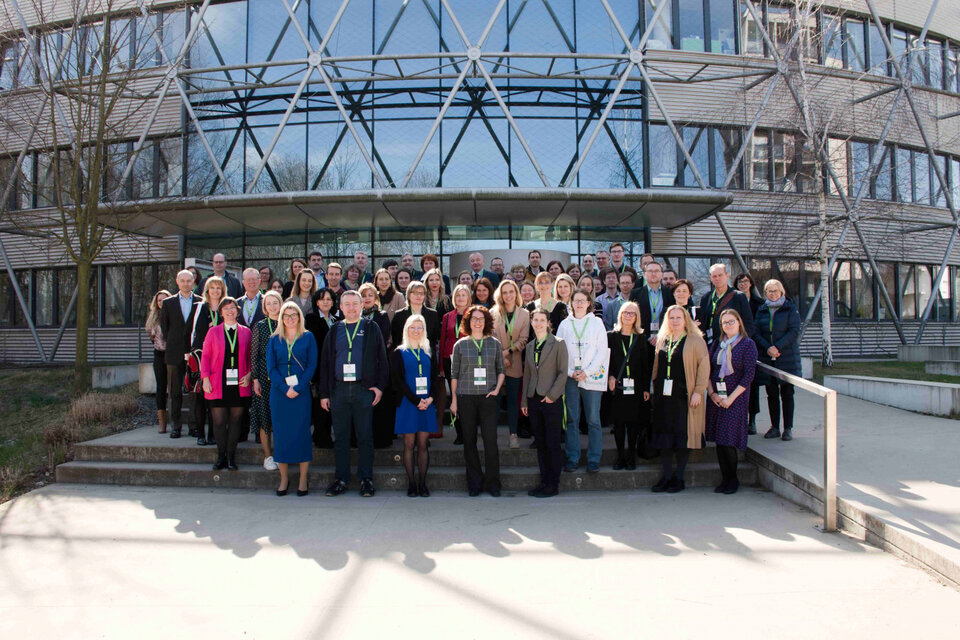
Alliance4Life is committed to bridge the innovation gap in CEE region
University of Tartu is engaged in a prestigious EU ninth Framework Programme Horizon Europe four-year project Alliance4Life_BRIDGE aiming to bridge the research and innovation gap between EU14 and EU13. The action is supported by 4, 7 million euros from the Horizon Widera 2023 European Excellence Initiative and led by CEITEC Masaryk University.
Widening measures are used to be associated with helping eligible countries network with leading research institutions, learning from top scientists, gaining experience in call applications, running projects and attracting and retaining skilled staff. Instead of just networking and teambuilding, measures that aim to bridge Europe’s research gap must be used to fund scientific research itself.
On June 5, 2024 Science Business published a viewpoint of Toivo Maimets, Professor of Cell Biology, University of Tartu on Widening measures which is partly referred in the article.
The same viewpoint is published in Estonian.
Measures that aim to close Europe’s research gap must be used to fund science, says University of Tartu professor of Cell Biology Toivo Maimets.
While funding and participation of Widening countries has increased in recent years, the innovation gap is growing, because the leaders are moving faster than the rest. As the European Innovation Scoreboard 2023 shows, the difference in performance within the group of emerging innovators has not narrowed and they are not catching with the next group, the moderate innovators.
To make a true difference, Widening measures should no longer mainly deal with institutional capacity building and developing international research networks, but focus on supporting top level researchers and research cooperation. ScienceBusiness June 05, 2024
There is strong support for Widening to be retained in the EU’s next research and innovation framework programme, FP10, with an analysis of 15 position papers showing universities, research organisations and industry groups are in favour of keeping the measures in place.
However, there are diverging opinions on the structure, the instruments, the budget and the purpose of these measures.
We analyse the views of 15 groups of stakeholders to see how they want measures designed to close the east – west research performance gap to change in FP10. ScienceBusiness May 22, 2024
The upcoming Tenth Framework Programme (FP10) of the European Union (2028-2034) is expected to bring significant changes to research funding. In this article, Vallo Mulk, Senior Specialist of International R&D Cooperation at the University of Tartu, discusses the current developments and the uncertainties surrounding FP10, particularly in relation to changes in funding allocation and research fields.
Mulk also interviews Professor Toivo Maimets, head of the Alliance4Life project at the University of Tartu and co-author of the Alliance’s Widening Policy Paper, a key document influencing the new Framework Programme.
Read the full article (in Estonian) which was published in August 2024 in the University of Tartu magazine (Number 04/2024, pages 18-21).
All publications
2026
During the state visit of Czech President Petr Pavel to Tartu, the University of Tartu and Masaryk University signed a cooperation agreement that creates new opportunities for expanding research and academic collaboration between the two institutions. At the same time, the visit highlighted the long-standing partnership between the universities, whose achievements have gained international recognition.
Time: May 28, 2026
Read the news
At an international lifelong learning conference held in December in the Czech Republic, participants confirmed that universities must invest increasingly in lifelong learning and offer flexible continuing education opportunities for learners at every stage of life. Representatives of the University of Tartu also took part in the conference.
Tiia Ristolainen and Ene Teemäe from the University of Tartu’s Lifelong Learning Centre attended the International Lifelong Learning Conference, held from 2–4 December at Masaryk University in Brno within the framework of the Alliance4Life BRIDGE project.
News on the webpage of the University of Tartu (23.01.2026)
The same news in Estonian (23.01.2026)
On 12 February 2026, the University of Tartu organized an international research funding information event titled Funding Nudge. The event focused on supporting researchers in navigating funding opportunities, preparing competitive proposals, and ensuring the smooth implementation of research projects. Participants included representatives of major Estonian public universities, the Estonian Research Council, DAAD, BAFF, and the international consultancy firm Civitta.
News on the webpage of IMCB (16.02.2026)
2025
Academic institutions still value research more highly than teaching, but this is not logical, says Mariëtte van den Höven, Professor of Medical Ethics and Philosophy at the Amsterdam University Medical Center. Instead of a rapid career trajectory, the primary focus should be on conducting high-quality research.
Mariëtte van den Höven delivered a public lecture in Tartu in October on transforming research culture and led a workshop on research ethics. She also spoke about this in an interview to the magazine Universitas Tartuensis, discussing what young leaders can do to promote research ethics within their teams.
The English version of the interview (Nov 21, 2025).
From October 1–3, 2025, the University of Tartu Ethics Centre hosted an international research integrity seminar organized by the Alliance4Life_BRIDGE project, bringing together research ethics specialists from 11 Central and Eastern European countries.
Read more from the webpage (news and media gallery).
At its board meeting on 18 September 2025 in Warsaw, the Alliance4Life network elected Professor Toivo Maimets from the University of Tartu as its new President.
As President, Maimets will represent Alliance4Life together with the Vice President to European institutions and stakeholders. He will advocate for scientific integrity, responsible governance, inclusiveness, and sustainability, and guide the alliance’s strategic development. His vision emphasises that excellent science requires not only cutting-edge research but also strong institutions, equal opportunities, and a united voice in shaping European research policy.
Read more on the Alliance4Life website.
Professor Toivo Maimets from the Institute of Molecular and Cell Biology at the University of Tartu, Estonia, published on July 2, 2025, a highly insightful article in the Frontiers journal titled "Cancer Research and the Mainstream of Biology". His article provides a thought-provoking examination of how cancer research has evolved and its ongoing relationship with broader biological theories. Maimets argues that cancer research not only follows the prevailing biological theories of the time but also actively shapes them. His critical perspective on current cancer theories offers fresh insights into the complexity of cancer and its connection to developmental biology and epigenetics.
Toivo Maimets' argument for incorporating developmental biology and epigenetics into cancer research is timely and necessary, as these fields provide crucial insights into the root causes of cancer.
As the Alliance4Life community continues to explore innovative solutions to the challenges in life sciences, Maimets' work serves as a valuable reminder of the need to look beyond traditional paradigms and embrace a more comprehensive approach to understanding and treating cancer.
The review on the article was written by Ester Jarour, Head of Strategic Partnerships and International Relations, Masaryk University.
The European Horizon Alliance4Life_BRIDGE project invites you to join an engaging research integrity seminar at the University of Tartu on October 2-3, 2025. This two-day event will provide a platform for scholars, researchers, and industry professionals to explore critical topics related to research integrity and ethics, fostering meaningful discussions and collaborations.
More information about the seminar and registration.
Widening Participation in the Excellent Science of the European Union (by Toivo Maimets, pp 77-79)
Member of the Board and Deputy-Head of the Alliance4Life, Professor Toivo Maimets, explains that excellence in research and innovation can only be achieved if all countries and regions in Europe advance together.
Over the past decade, widening countries (those with lower research and innovation performance) have made substantial progress in increasing their participation in European research and innovation programmes. However, differences have emerged in the development capacity and needs of research institutions in these countries. Alliance4Life, the life sciences network of Central and Eastern European top-research institutions, believes that the current system of framework programme support measures needs a smarter and more flexible solution to improve the situation.
Alliance4Life has launched policy recommendations to the European Commission for the next framework programme.
Read more from the University of Tartu webpage (09.05.2025)
On January 9th, researchers of the Institute of Molecular and Cell Biology participated in a joint seminar with Alina Paas, an Intellectual Property Analyst from the University’s Entrepreneurship Center. The seminar aimed to address challenges scientists face in managing intellectual property and navigating the initial steps of commercialization, providing practical tools to help overcome these obstacles.
Alina Paas is responsible for the protection and commercialization of intellectual property (IP) created at the university. She also provides guidance and training for students and staff. With extensive experience, Alina has advised corporate clients and startups from 19 countries on matters related to intellectual property and contract law.
Starting in 2025, Alina will lead the Technology Transfer Focus Group within the Alliance4Life consortium, driving initiatives to enhance the transfer of research outcomes into practical applications.
The news was published at the webpage of the IMCB on 16.01.2025.
2024
The Alliance4Life proudly congratulates Professor Toivo Maimets, a distinguished member of our Board and a leading figure in Estonian science, for receiving the prestigious Tiiu Sild memorial lifetime achievement award for long-standing and systematic popularization of science and technology. This award was presented at the Estonian Research Council’s annual science communication conference on November 15, 2024, which recognised outstanding advocates of science.
Read the full article on the webpage
One of the goals of good research practice is to foster a supportive research culture. However, research institutions still experience behavior that conflicts with research ethics and good research practice, as shown by a 2023 study conducted among researchers at the University of Tartu. Surprisingly, questionable behavior—such as obstructing another researcher’s work—occurs quite frequently.
Mari-Liisa Parder, Research Fellow in Ethics and her colleagues discuss why research integrity is important in scientist's everyday life. The article was published in Estonian in University of Tartu magazine (Number 2, April, 2024, pages 22-24).
Mari-Liisa Parder is also the Co-Chair of the Focus Group 2 dealing with Research Integrity in the Alliance4Life.
2023
University of Tartu is engaged in a prestigious EU ninth Framework Programme Horizon Europe four-year project Alliance4Life_BRIDGE aiming to bridge the research and innovation gap between EU14 and EU13. The action is supported by 4, 7 million euros from the Horizon Widera 2023 European Excellence Initiative and led by CEITEC Masaryk University.
The Alliance4Life consortium, consisting of 12 leading life science institutions from 11 countries in Central and Eastern Europe, including the University of Tartu, hosted the conference "Widening Instruments - Participants' View" at the Permanent Representation of Estonia to the EU in Brussels on 12 December.
On November 15, 2023 the conference on sustainable science titled “Sustainable Science – What is the Environmental Footprint of Scientific Knowledge Creation?” was organized by the Institute of Molecular and Cell Biology and the Centre for Sustainable Development, University of Tartu. This was the first conference focused on the environmental burden of creating scientific research itself among Estonian universities which brought together experts from all local major universities and research funders.
Although several measures have been implemented to close the innovation gap between the old and the new EU member states, the gap continues to increase. An analysis focusing on life sciences suggests that instead of importing talent from Western Europe, more emphasis should be laid on nurturing local excellence.
From 8-10 June 2023, 30 early-stage researchers (PhD, PostDoc) from Alliance4Life partners were invited to Ljubljana, Slovenia where another Skills Academy was held with the focus in upgrading personal competencies and expanding scientific, leadership and managerial skills.
On the last week of April, 2023 the Allinace4Life gathered in Medical University of Lodz, Poland to held a Community Meeting, thematic scientific mini-conference with matchmaking event and a technology transfer workshop for the members of the alliance.
2022
With the first courses organized in September (12-16, 2022) in Bulgaria and hosted by the Medical University of Sofia, Alliance4Life has opened its Research Management Administration Academy (RMA academy) focused on training research management professionals from each member country of the project.
This long-awaited in-person Community Meeting followed a two and half years of online collaboration caused by the covid-19 pandemic. The Community Meeting and Skills Academy took place from 28th to 30th April and brought together 120 scientists and research managers from 12 countries in the intellectual capital of Estonia – Tartu.
PhD students and postdoctoral researchers from more than eleven European countries had a unique chance to get together, learn, network, explore interesting career possibilities and funding options. Alliance4Life organized Early Stage Researcher´s Retreat that will connect twelve leading Central and Eastern European life science universities and research institutes from eleven countries in an online interactive event that took take place on 20 and 21 January 2022.
2019
