

-
Faculty of Arts and HumanitiesJakobi 2, r 116-121, 51005 Tartu linn, Tartu linn, TartumaaJakobi 2, 51005 Tartu linn, Tartu linn, TartumaaJakobi 2, IV korrus, 51005 Tartu linn, Tartu linn, TartumaaJakobi 2, III korrus, ruumid 302-337, 51005 Tartu linn, Tartu linn, TartumaaÜlikooli 16, 51003 Tartu linn, Tartu linn, TartumaaÜlikooli 18, 50090 Tartu linn, Tartu linn, TartumaaLossi 3, 51003 Tartu linn, Tartu linn, TartumaaPosti 1, 71004 Viljandi linn, ViljandimaaJakobi 2, 51005 Tartu linn, Tartu linn, TartumaaJakobi 2, 51005 Tartu linn, Tartu linn, TartumaaFaculty of Social SciencesLossi 36, 51003 Tartu linn, Tartu linn, TartumaaJakobi 5, 51005 Tartu linn, Tartu linn, TartumaaLossi 36, ruum 301, 51003 Tartu linn, Tartu linn, TartumaaNarva mnt 18, 51009 Tartu linn, Tartu linn, TartumaaNäituse 2, 50409 Tartu linn, Tartu linn, TartumaaNäituse 20 - 118, 50409 Tartu linn, Tartu linn, TartumaaLossi 36, 51003 Tartu linn, Tartu linn, TartumaaRaekoja plats 2, 20307 Narva linn, Ida-VirumaaLossi 36, 51003 Tartu linn, Tartu linn, TartumaaLossi 36, 51003 Tartu linn, Tartu linn, TartumaaFaculty of MedicineRavila 19, 50411 Tartu linn, Tartu linn, TartumaaBiomeedikum, Ravila 19, 50411 Tartu linn, Tartu linn, TartumaaNooruse 1, 50411 Tartu linn, Tartu linn, TartumaaL. Puusepa 1a, 50406 Tartu linn, Tartu linn, TartumaaL. Puusepa 8, 50406 Tartu linn, Tartu linn, TartumaaRavila 19, 50411 Tartu linn, Tartu linn, TartumaaUjula 4, 51008 Tartu linn, Tartu linn, TartumaaRavila, 50411 Tartu linn, Tartu linn, TartumaaRavila 19, 50411 Tartu linn, Tartu linn, TartumaaFaculty of Science and TechnologyVanemuise 46 - 208, 51003 Tartu linn, Tartu linn, TartumaaNarva mnt 18, 51009 Tartu linn, Tartu linn, TartumaaRavila 14a, 50411 Tartu linn, Tartu linn, TartumaaNarva mnt 18, 51009 Tartu linn, Tartu linn, TartumaaRiia 23, 23b - 134, 51010 Tartu linn, Tartu linn, TartumaaNooruse 1, 50411 Tartu linn, Tartu linn, TartumaaJ. Liivi tn 2, 50409 Tartu linn, Tartu linn, TartumaaRiia 23b/2, 51010 Tartu linn, Tartu linn, TartumaaVanemuise 46, 51003 Tartu linn, Tartu linn, TartumaaVanemuise 46, 51003 Tartu linn, Tartu linn, TartumaaArea of RectorArea of Vice Rector for Academic AffairsUppsala 10, 51003 Tartu linn, Tartu linn, TartumaaÜlikooli 18b, 51005 Tartu linn, Tartu linn, TartumaaÜlikooli 18a (III korrus), 51005 Tartu linn, Tartu linn, TartumaaArea of Vice Rector for ResearchW. Struve 1, 50091 Tartu linn, Tartu linn, TartumaaArea of Director of AdministrationÜlikooli 18, ruumid 102, 104, 209, 210, 50090 Tartu linn, Tartu linn, TartumaaÜlikooli 18A (III korrus), 51005 Tartu linn, Tartu linn, TartumaaArea of Head of FinanceÜlikooli 17, 51005 Tartu linn, Tartu linn, TartumaaArea of Vice Rector for DevelopmentLossi 25, 51003 Tartu linn, Tartu linn, TartumaaVanemuise 46, 51003 Tartu linn, Tartu linn, TartumaaNarva mnt 18, 51009 Tartu linn, Tartu linn, TartumaaArea of Academic SecretaryUppsala 6, Lossi 36, 51003 Tartu linn, Tartu linn, Tartumaa
Use of inert microfluidics to separate extracellular microvesicles from blood
Elucidation of the mechanisms of chromosomal instability in early embryogenesis
Functional genomics - transgenic reporter methods to assess the effects of diseases and selection-related genetic variants on gene expression.
Production and growth of human-induced pluripotent cells for functional assays.
Early diagnosis of colorectal cancer.
Development of new genomics methods
functional genomics
functional transcriptomics
study of genome editing and epigenetic changes
Biotechnology research group
Our current research focus is the role of DNA copy-number changes in female reproductive ageing and infertility, chromosomal instability in human, and bovine as a model, early embryos. In addition development and implementation of new methods for transcriptomics, genome editing and epigenetic profiling of small number of cells to enable functional studies from well-defined cell populations including embryonic- and stem-cells.
We are collaborating with the Center of Genomics, Evolution and Medicine (cGEM) to implement functional genomics assays to study how DNA polymorphisms contribute to phenotypic variation. As a model system we have set up a workflow to create induced pluripotent stem cells (iPSCs). This will allow to create person specific cell-lines that self renew, are pluripotent and can thus be used to model different tissues or diseases. In parallel, we are developing high throughput assays such as massively parallel reporter assay (MPRA) that allows us to assess the gene regulatory activity of thousands of genomic regions in parallel.
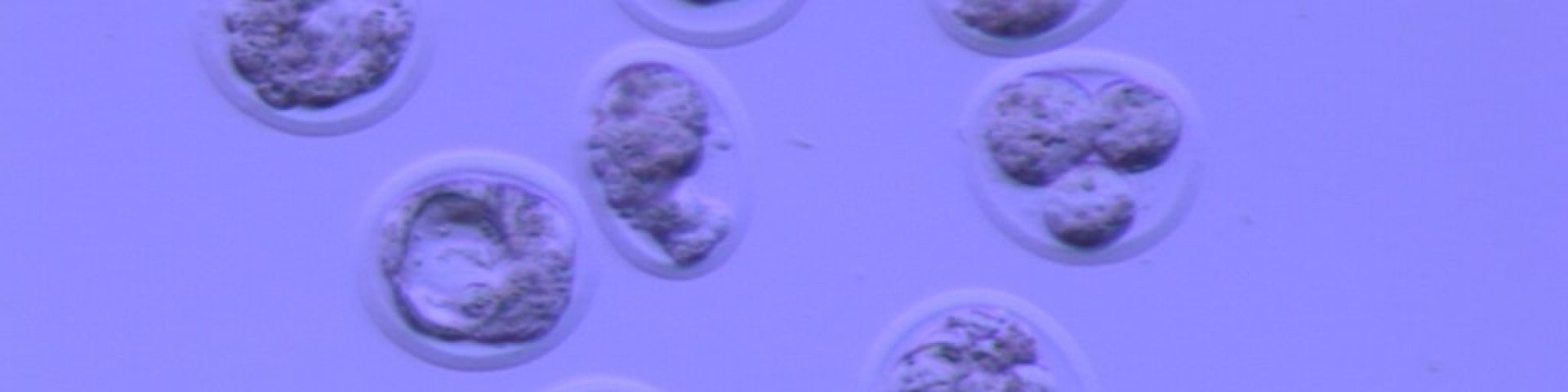
Image used in header: mouse embryos (author: Baris Yasar, PhD student)
- Boskovic, N., Ivask, M., Yazgeldi Gunaydin, G., Yaşar, B., Katayama, S., Salumets, A., Org, T., Kurg, A., Lundin, K., Tuuri, T., Daub, C.O., Kere, J. (2025). Oxygen level alters energy metabolism in bovine preimplantation embryos. Sci Rep 15(1):11327. DOI: 10.1038/s41598-025-95990-z
- Zhao, Y., Fernández-Montoro, A., Peeters, G., Jatsenko, T., De Coster, T., Angel-Velez, D., Lefevre, T., Voet, T., Tšuiko, O., Kurg, A., Smits, K., Van Soom, A., Vermeesch, JR. (2025). Origin and development of uniparental and polyploid blastomeres. iScience. 28(5):112337. DOI: 10.1016/j.isci.2025.112337
- Yaşar, B., Boskovic, N., Ivask, M., Weltner, J., Jouhilahti, E., Viil, P., Skoog, T., Jaakma, Ü., Kere, J., Bürglin, T., Katayama, S., Org, T., Kurg, A. (2024). Molecular cloning of PRD-like homeobox genes expressed in bovine oocytes and early IVF embryos. BMC Genomics 25, 1048. DOI: https://doi.org/10.1186/s12864-024-10969-w
- Essers, Rick & Lebedev, Igor & Kurg, Ants & Fonova, Elizaveta & Stevens, Servi & Koeck, Rebekka & Rango, Ulrike & Brandts, Lloyd & Deligiannis, Spyridon-Panagiotis & Nikitina, Tatiana & Sazhenova, E. & Tolmacheva, Ekaterina & Kashevarova, Anna & Fedotov, Dmitry & Demeneva, Viktoria & Zhigalina, Daria & Drozdov, Gleb & Al-Nasiry, Salwan & Macville, Merryn & Zamani Esteki, Masoud. (2023). Prevalence of chromosomal alterations in first-trimester spontaneous pregnancy loss. Nature Medicine. 29. DOI:10.1038/s41591-023-02645-5
- Krigul KL, Aasmets O, Lüll K, Org T, Org E. Using fecal immunochemical tubes for the analysis of the gut microbiome has the potential to improve colorectal cancer screening. Sci Rep. 2021 Oct 1;11(1):19603. doi: 10.1038/s41598-021-99046-w
- Rooda I, Hensen K, Kaselt B, Kasvandik S, Pook M, Kurg A, Salumets A, Velthut-Meikas A. Target prediction and validation of microRNAs expressed from FSHR and aromatase genes in human ovarian granulosa cells. Sci Rep. 2020 Feb 10; 10(1):2300. doi: 10.1038/s41598-020-59186-x
- Hensen K, Pook M, Sikut A, Org T, Maimets T, Salumets A, Kurg A. Utilising FGF2, IGF2 and FSH in serum-free protocol for long-term in vitro cultivation of primary human granulosa cells. Mol Cell Endocrinol. 2020 Apr 12:110816. doi: 10.1016/j.mce.2020.110816
- Zamani Esteki M, Viltrop T, Tšuiko O, Tiirats A, Koel M, Nõukas M, Žilina O, Teearu K, Marjonen H, Kahila H, Meekels J, Söderström-Anttila V, Suikkari AM, Tiitinen A, Mägi R, Kõks S, Kaminen-Ahola N, Kurg A, Voet T, Vermeesch JR, Salumets A. In vitro fertilization does not increase the incidence of de novo copy number alterations in fetal and placental lineages. Nat Med. 2019 Nov 4. doi: 10.1038/s41591-019-0620-2
- Org T, Hensen K, Kreevan R, Mark E, Sarv O, Andreson R, Jaakma Ü, Salumets A, Kurg A. Genome-wide histone modification profiling of inner cell mass and trophectoderm of bovine blastocysts by RAT-ChIP. PLoS One. 2019 Nov 25;14(11):e0225801. doi: 10.1371/journal.pone.0225801
Novaator, 26.09.2026: Tartu teadlaste veretest toob ilmsiks katkenud raseduse geneetilise põhjuse
Novaator, 05.05.2026: Doktoritöö: viljatusravi edu sõltub embrüo esimesest arenguetapist
Tartu Ülikooli molekulaar- ja rakubioloogia instituut: „Ettevõtetega koostöös otsitakse võimalusi veremürgituse kiiremaks diagnoosimiseks“
